

My 2026 Reads
Although my 2025 reading goals weren’t completely met, I accomplished more than not! I have been in a standoff with the rest of my psycho-ed shelf sitters because my love for fiction really took off in 2025. I still did not buy any new books in 2025 and I finished 45 physical books. Any of those that were psycho-ed or memoirs can of course be found in the 2025 review tab. I hit a bit of a burnout with reading in general over the Summer during my fantasy series. That’s what 600+ page books will do to me. However, I’m hopeful that I will gain momentum once again. My goals are renewed to finish the shelf sitters in my office and to continue reading fiction and memoirs that inspire me. I haven’t set a number goal for this year because it doesn’t feel right for this year. More to be revealed for this year’s reading journey!
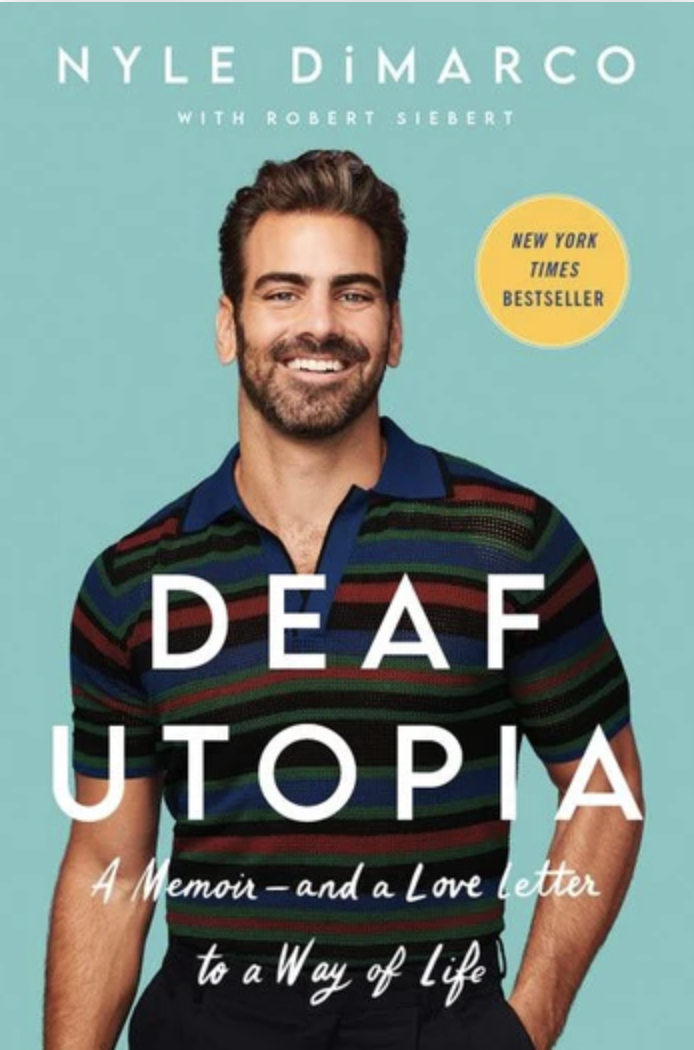
Deaf Utopia
This memoir caught my eye in the library because of my partial deafness. As a result of a medical procedure in 2020, I completely lost hearing in my left ear. I am fortunate to have hearing in my right ear, but this experience has drawn me to learning more about Deaf folks. In DiMarco’s memoir, he educates his audience on the history of deaf education in the United States and the prejudices that Deaf folks experience regularly. The 1880 Milan Conference designated oralism as preferred form of education over signing which paved the way for the next century of deaf education to be frustrating. Luckily our nation has come a long way in ethics and advocacy to allow for Deaf folks to claim their right to signing. It is unfair to assume that a Deaf person can read lips…they would prefer to communicate with pen and paper with a hearing person. I have learned more about how ASL is structured and it inspires me to follow through with my goal of learning ASL one day. DiMarco also opens up about his experience being in the LGBTQ+ community which is inspiring to learn about. This is a story of pride and resiliency.
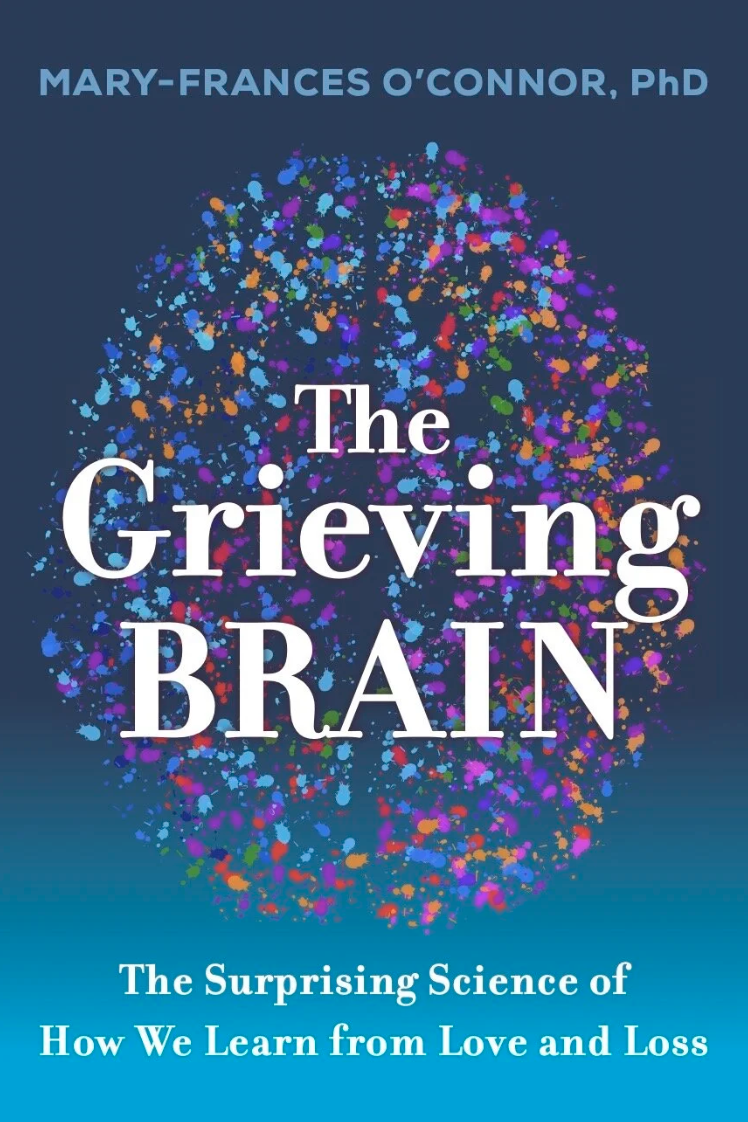
The Grieving Brain
“Through my years of study and research, I eventually realized the brain has a problem to solve when a loved one has died. This is not a trivial problem. Losing our one-and-only overwhelms us, because we need our loved ones as much as we need food and water.”
I was immediately sucked into how Dr. O’Connor writes and how she conveys the education in her research. She highlights the science behind what the brain actually experiences when grieving a loved one. The background provided on John Bowlby’s attachment theory was especially helpful to understand this. We equate attachments with comfort and safety, and when we lose those attachments, we lose that essential connection that aids our survival. Additionally, our brain is forced to adjust its expectations when someone dies or we lose them outside of death (ex: breakup). We are wired to make predictions and the brain has to work when those predictions are no longer what they used to be. Developing new predictions via new lived experiences takes time. “Resolving incompatible beliefs interferes with learning” (p. 60) which accounts for why it takes so much time. Dr. O’Connor talks about how time doesn’t heal, but new experiences do. A resilient grieving process incorporates both acknowledging the loss and also maintaining daily present day experiences. She states “On the waves of grief, eventually acceptance rises more often, and distress falls off in intensity without completely disappearing” (p. 75). The key to coping well and engaging in a resilient process vs. a complicated one is the flexibility of going from tending to day-to-day to addressing grief related stressors.
She incorporates many other research studies into her book, including why Kubler-Ross’s famous 5 stages of grief aren’t applicable to the range of grief experiences that can show up in our lives today. There is other rich research about the science behind avoiding and rumination, common behaviors involved in grieving. They are both there to aid us, but can lead to complicated grief if not acknowledged and managed. What feels most important that Dr. O’Connor highlights is that there is no one response or path that creates the “perfect” grieving process. It is often an oscillation of things, and it is never over. Instead, “[r]estoring a fulfilling life may be a better definition, pointing to adaptation, which [she] thinks is more accurate than thinking of grief as being ‘over’” (p. 191). I appreciated her wrap up of how the key to walking through grief is paying attention to the present, remembering the past, and planning intentionally.
Click for more on Dr. O’Connor and this book if interested!